
Iran, Trump, and Your Investments: Panic or Take Advantage?
2026-04-10
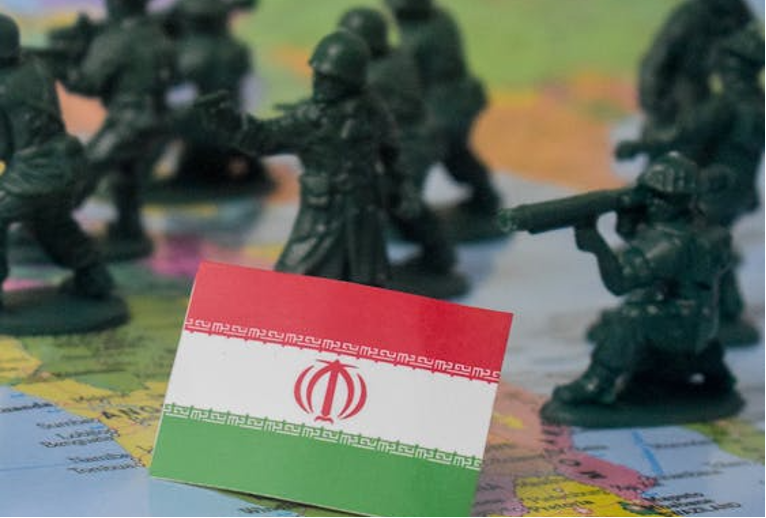
Since the Iranian conflict began, one impression has dominated: markets seem to be pulling back across the board, without offering a real safe haven. Stocks, bonds, international markets — nearly every asset class is showing declines. Yet those pullbacks have remained relatively contained. That apparent contradiction holds important lessons for investors.
U.S./Iran military conflict and global geopolitical crisis
When a geopolitical shock hits, markets’ first reaction is rarely perfectly rational. Uncertainty drives volatility higher and prompts a rapid repricing of risk. The U.S.–Israeli strike against the Iranian regime triggered not only a military response from the government in Tehran, but also an economic countermove that appears to have caught the White House off guard. By closing the Strait of Hormuz under its control, Iran chose to choke off a significant share of the world’s energy supply chain and agricultural inputs. In answering with missile fire toward Gulf states, it has severely threatened the Middle East’s tourism economy. Investors are adjusting their expectations to more uncertain economic scenarios: higher energy prices, supply-chain disruptions, and a possible slowdown in global growth. Those adjustments often show up as broad-based selling in the short term.
However, contrary to a common belief, markets do not systematically “panic.” They quickly incorporate available information and try to anticipate real economic impacts rather than the event itself. That is why, even amid high tension, declines can stay moderate. Institutional investors in particular take a probabilistic approach: they weigh different scenarios and adjust portfolios accordingly.
Nowhere to hide – the patience test
This is where the fundamental difference between reacting and strategizing comes in. Reacting means adjusting your portfolio based on recent market moves. Adopting a strategy, by contrast, means understanding the underlying mechanics and positioning thoughtfully. In an uncertain environment where global markets are in the red, as the chart below illustrates, the urge to react quickly is strong — but it is rarely rewarded. This reality is captured well by one of my favourite Warren Buffett quotes: “The stock market is a device for transferring money from the impatient to the patient.” That line rings especially true in periods like the one we are seeing now. Volatility acts as a filter: it tests investors’ discipline and rewards those who keep a long-term perspective.

Source: Bloomberg, 17 March 2026
Now is the time to talk to your financial planner
When markets are broadly lower, a crisis is also a chance to return to basics. Rather than focusing only on investment performance, it can make sense to confirm whether you are still aligned with your goals and, above all, to identify planning strategies that are often overlooked. For example, a couple might use a drop in income or in the value of certain assets to optimize RRSP withdrawals at a lower tax rate, or to put retirement income splitting in place. Other strategies — such as greater use of the TFSA, planned giving, or an estate review — can also yield meaningful tax savings and lasting value. In practice, when markets are surging, these optimizations often take a back seat because “natural” gains mask their impact. Frankly, when rising markets lift your portfolio, satisfaction runs so high that complacency sets in. Yet in a pullback, it is time to speak with your financial planner: improvements to your financial picture can become another way to capture the “returns” the market is not delivering for a while, and to grow your wealth — not through stock performance, but through financial savvy.
Disclaimer
This information was prepared by Lionel Dossou, who is a Wealth Advisor for iA Gestion Privée de Patrimoine Inc., and does not necessarily reflect the opinion of iA Private Wealth Inc. The information contained in this text comes from sources believed to be reliable, but we cannot guarantee its accuracy or reliability. The opinions expressed are based on analysis and interpretation dating back to the publication date and are subject to change without notice. Furthermore, they constitute neither an offer nor a solicitation to purchase or sell the securities mentioned. The information contained in this document may not apply to all types of investors. iA Private Wealth Inc. is a member of the Canadian Investor Protection Fund and the Investment Regulatory Organization of Canada. iA Private Wealth is a trademark and another name under which iA Private Wealth inc. carries out its activities.